eCommerce Returns Software for Retaining Revenue
ClickPost's AI returns platform helps 450+ brands turn returns into exchanges, prevent fraud, and automate reverse logistics across 600+ carriers.
Trusted by 450+ global brands
What is ClickPost Returns?
An enterprise ecommerce returns solution that automates reverse logistics end-to-end, from return initiation to refund or exchange. It combines a branded self-service portal, AI policy personalization, multi-carrier label generation, and real-time tracking in one platform.
Four ways ClickPost turns returns into a profit center
Your returns function stop at "process the refund." ClickPost is built around a different question: how much of every return can we keep in your ecosystem?
Curb return policy abusers
Convert returns into exchanges
Returns, now your repurchase moments
Automate reverse logistics, end to end
The most intelligent returns platform
for eCommerce
Built for the way modern returns
actually work
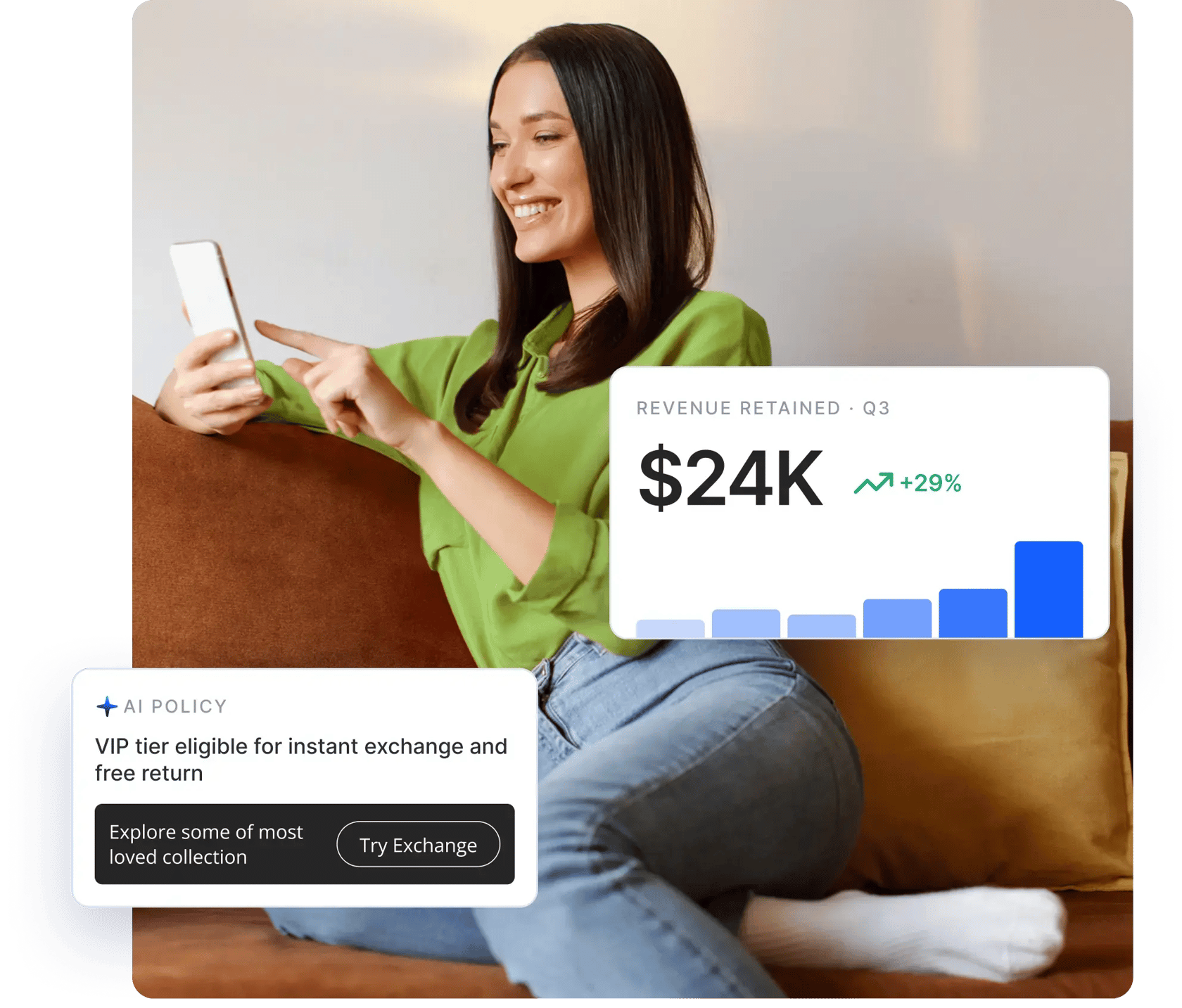
Apply different return rules to different customer segments automatically
-
Identify VIPs, first-timers, and serial returners on the fly
-
Set different windows, fees, and refund methods per segment
-
Override with custom rules per region, SKU, or warehouse
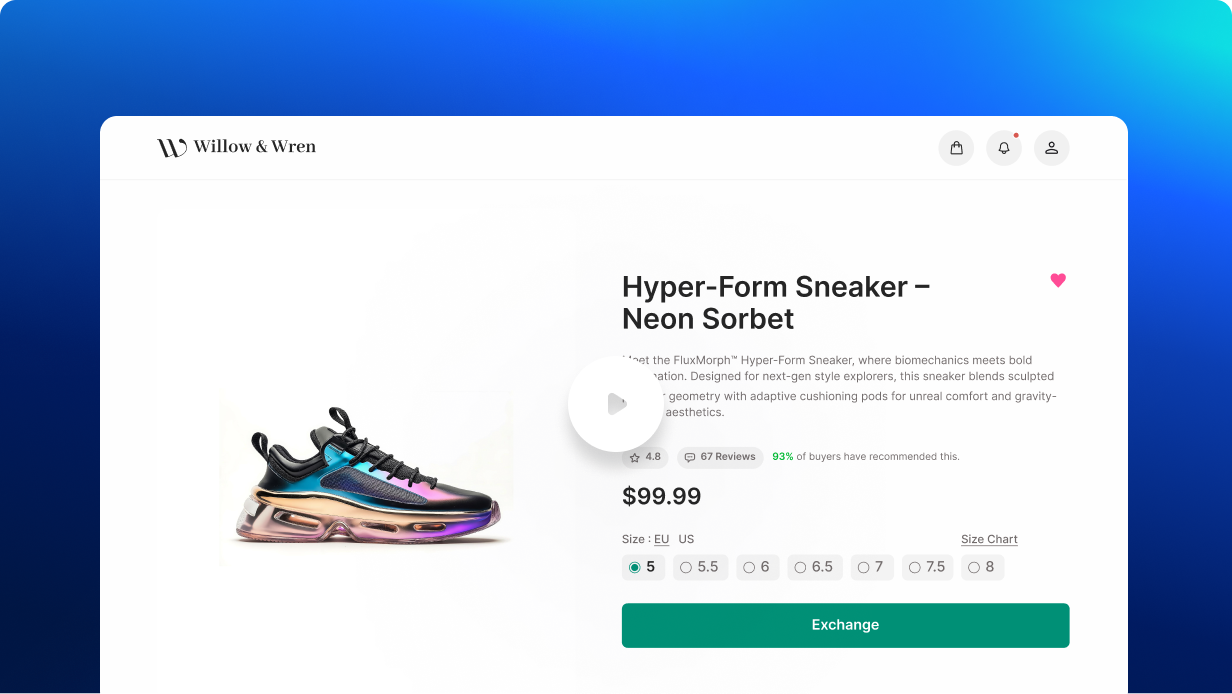
Convert refunds into exchanges withone-click size and color swaps
-
Instant exchange before the original return ships
-
Cross-catalog swaps with bonus credit incentives
-
"Shop anything" upsells that recover incremental revenue
Catch policy abuse before the refund clears
-
Automatically apply stricter policies for high returners
-
Add return fee, offer store credits only
-
Automatic escalation rules for high-value items
Generate return labels across 600+ carriers
-
Single view for all return requests and statuses
-
Pre-paid label generation in under two seconds
-
Seamless in-store returns support
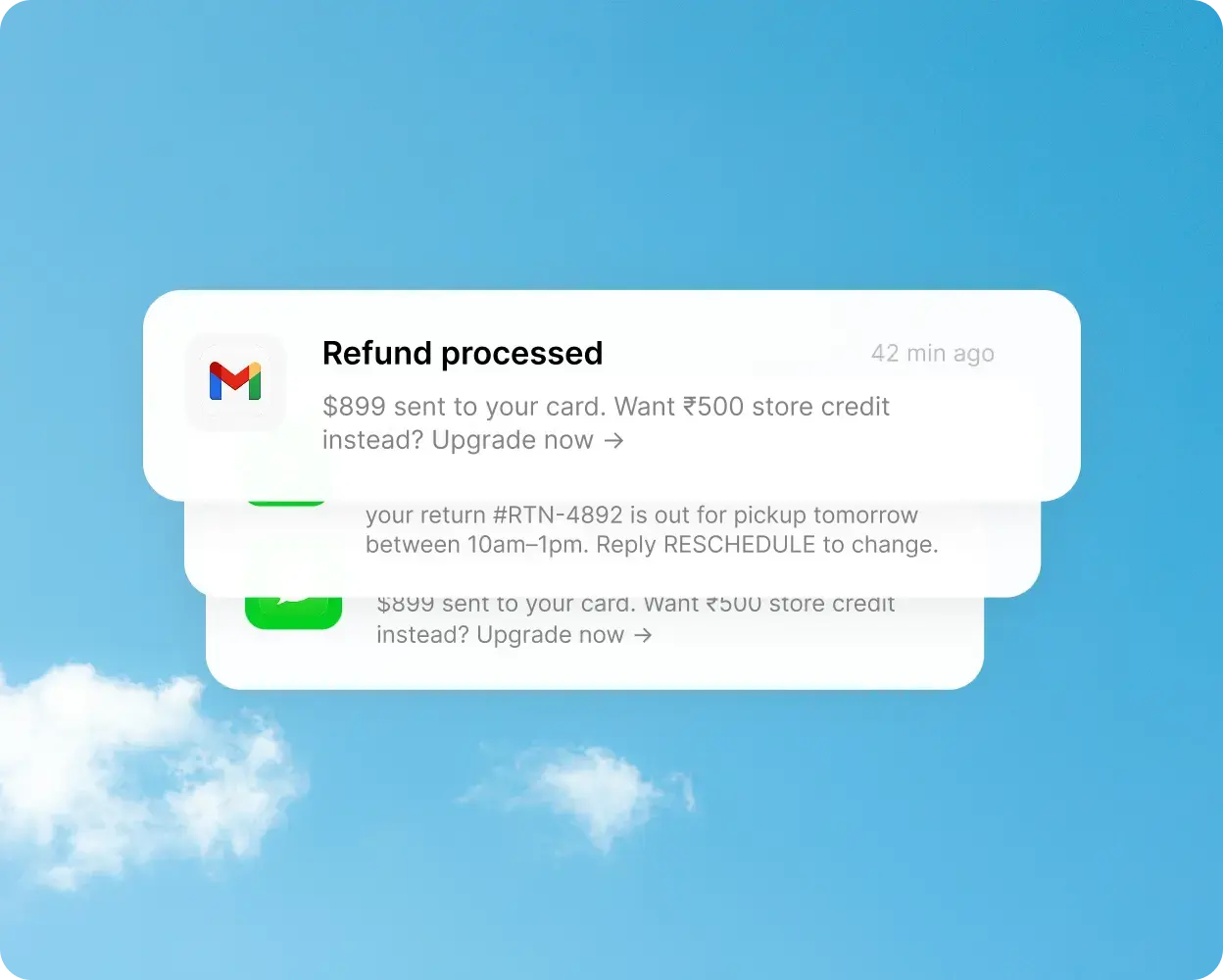
Keep customers in the know on every return automatically
-
Multi-channel notifications with full template control
-
Branded tracking page with upsell modules
-
Two-way helpdesk integration with Zendesk, Gorgias, Freshdesk
A returns flow that keeps the revenue in the store.
Walk the journey your customer sees. Every step is built to convert a refund into an exchange or store credit before money leaves your business.
Start a return
Pick the item you'd like to send back. You can add more later.
Why are you returning this?
Structured reasons power your sizing and quality dashboards — no free-text guesswork.
We have a larger size in stock. Swap it now and we'll ship the replacement before the return even reaches us.
Exchange for a new size
Same item, no extra charge. This is the moment a refund becomes retained revenue.
How would you like your money back?
Store credit is sweetened with a bonus, so most customers spend it — and often more.
How should we collect it?
ClickPost auto-assigns the best reverse carrier by ZIP-code serviceability and cost.
You're all set!
Your exchange is confirmed.
How ClickPost compares to Loop, Narvar, and AfterShip
Comparison based on publicly available product information as of October 2025. Updated quarterly.
The brands using ClickPost to
retain revenue
-
The Returns and Refunds module stands out by making reverse shipments and refunds easier to manage. The platform is intuitive, customizable, and backed by a highly responsive team.
Chetan W Senior Manager, eCommerce Operations, Puma -
ClickPost helps us power a hassle-free returns experience, which has positively impacted our NPS.
Anshu Kumar Logistics & Customer Delight Lead, Comet -
While the customer is placing a return request, we are nudging to exchange. ClickPost is working well and our end user experience is good too.
Bharath GM eCommerce Operations, UrTurms Apparel
Plugs into your entire stack
shopfront, WMS, ERP, helpdesk.
Loved by buyers. Recognized by G2. Audited for the enterprise.

Think of it as everything that happens after someone clicks "return," handled for you. The customer lands on a return page that looks like your store — not some random third-party screen — and files the return there. ClickPost checks it against your rules before anyone has to look at it, offers them an exchange or store credit first so a refund isn't the automatic answer, and once it's approved, generates the carrier label right then and tracks the parcel both ways until it's back with you.
Most people don't come to us because they planned to. They come because returns slowly ate a chunk of someone's week — the status emails, the refunds you could've saved with a quick swap, the boxes stacking up waiting to be checked back in. That's the part we take off your plate.
Honestly? Whichever one gets you out of doing returns by hand without making you hire a developer to set it up. At your size, three things really matter: customers being able to sort their own returns instead of emailing you, you being able to change your own rules without raising a ticket, and exchanges that hold onto the sale instead of just refunding it.
That's pretty much the spot ClickPost is built for. It goes live on Shopify with no dev work, your rules sit in the Smart Policy Engine where your team can tweak them whenever, and it nudges exchanges ahead of refunds. Loop and AfterShip are both worth a look too, I won't pretend otherwise — but once you start shipping across regions, ClickPost's carrier options and tracking are usually where it pulls ahead.
Short version: they're solving different problems, so it really comes down to your setup.
Loop's the Shopify-native one, big on exchanges, and DTC fashion brands swear by it — just know you're tying yourself to Shopify to use it.
Happy Returns (PayPal owns them) is the no-box, no-label one — your customer drops the item at a physical Return Bar and walks off. If that in-person drop-off is the experience you're going for, that's your pick.
ClickPost handles returns and exchanges across more than just Shopify, on a multi-carrier network, with tracking built right in.
So roughly: Loop if you're staying on Shopify and want it deep, Happy Returns if drop-off is the whole idea, us when you care about carrier choice and tracking that holds up across a border. And check everyone's pricing yourself before you commit — it moves around a lot.
Yep — and it's one of the main reasons people switch to us. The second a customer starts a return, we put an exchange or store credit in front of them before a refund even comes up. They can change the size, swap the color, grab something else entirely, all without leaving the flow. Store credit keeps that money with you instead of bouncing back to their card. And you decide how all of it shows up and what's even eligible.
Where you'll really feel it is fashion. Most of those returns are just "didn't fit" — so if you can turn that into a swap, you keep money that was about to walk out the door.
All three, yeah. ClickPost plugs straight into Shopify and WooCommerce, and it runs on a multi-carrier network covering the big US carriers — FedEx, UPS and USPS included.
On the store side, Shopify and WooCommerce sync your portal, your rules and your orders without anyone touching code. On the carrier side, it spins up the return label and tracks the parcel back to your warehouse.
Quick heads-up while you're shopping around, though: everyone says they're "Shopify-friendly." Fewer actually do WooCommerce well, and direct carrier coverage gets thin faster than you'd think. So before you sign anything, check your exact platform and your exact carriers — and don't take the logos on the integrations page at face value, ask which ones are actually live.
With high apparel volume you've got two problems at once, and most tools only fix one. You need to stop refunds quietly bleeding out your revenue, and you need to keep your team from drowning in manual work as the numbers climb. ClickPost takes on both.
The exchange-first flow gets a size or color swap in front of the customer before they hit refund, so a lot of returns just turn back into sales. The Smart Policy Engine runs your final-sale tags, return windows and product rules on autopilot — which matters a lot more once you're at volume, because one slip on a manual check happens a thousand times over. And the live tracking clears out those "where's my refund?" tickets that pile up right when you're busiest.
For fashion the trick is just being quick with the exchange — quicker than the urge to refund and move on.
Aim the friction at the people actually causing the problem. Most abuse comes from a small handful of shoppers, so cracking down on everyone just irritates your good customers to catch a few bad ones. Targeted rules do the job better.
With our Smart Policy Engine you can set return windows and make people give a reason on every request, flag accounts whose returns look off or keep repeating, lock down the final-sale and high-risk stuff, and base the rules on someone's order history instead of treating everyone the same.
Done right, the guy who returns everything keeps hitting walls, while the customer who just grabbed the wrong size goes through fine and never even clocks that there are rules.
The subscription price is kind of a red herring, because doing it in-house buries the real cost in places that never show up as one number.
Your support team burns hours on manual approvals and refund emails. You pay out refunds where an exchange would've kept the sale. Stock sits around because nobody's restocked it yet. And someone on your eng team is quietly babysitting the portal you built — that's their time gone too.
Something like ClickPost rolls all that scattered, growing cost into one predictable fee, and it mostly pays for itself by flipping refunds into exchanges. When you actually do the math, the price tag's rarely the deciding bit — it's the hours your team gets back and the sales you stop losing.
Pretty fast, since there's no custom build in the way. On Shopify or WooCommerce the portal just installs — no developer needed — so if your setup's simple (one return window, standard exchange logic) you can be live in a few days. If it's more involved, like separate DTC and marketplace policies or custom carrier routing, that's where you'll spend a bit more time configuring up front.
The install's basically never the slow part — your own rules are. Either way, you're not sitting around waiting on an engineering project just to switch it on.
It's usually a one-to-three-week job, not some big re-platform — and most of it is making decisions, not engineering. Roughly how it goes:
- Sort out your policy first. Return windows, what's eligible, and how you're handling refund vs. exchange vs. store credit. The software enforces a policy — it can't make one up for you.
- Hook up the platform. Connect it to your store (Shopify, Magento, WooCommerce, whatever you're on), your OMS/WMS and your payment gateway so orders and refunds sync on their own.
- Get carriers and reverse logistics sorted. Plug in your carrier accounts so it can auto-generate labels or QR codes and send pickups to the right warehouse.
- Build the portal. Your logo, your return reasons, your rules — what auto-approves, what goes to manual review, who gets offered an exchange or credit.
- Switch on notifications and tracking. Updates at request, in transit, received, refunded.
- Test the whole thing. Run real returns through every path — refund, exchange, rejection — before you go live.
- Launch and keep an eye on it. Watch your return reasons, processing time and exchange rate, and tweak from there.
With ClickPost most of that middle stretch is already done — carrier integrations pre-built, portal's no-code, rules engine is configured rather than coded — so most brands get going without dragging engineering into it.
Mostly by getting rid of the bit of online shopping everyone hates. You know how it normally goes — email support, wait a few days, cross your fingers. With returns software the customer just opens a portal, picks the item, and gets a prepaid label or QR code in seconds, and the whole thing stays on your brand instead of dumping them onto some generic page.
A few things make the difference here. They can actually see where the return is the whole way through, so "where's my refund?" stops being a ticket. They can swap for the right size or take store credit, so a wrong-size order turns into a happy customer instead of a complaint. And faster refunds — sometimes before you've even inspected the item — take the sting out of waiting on their money.
And it genuinely pays off. Most shoppers will happily buy from you again after an easy return, and an easy return policy keeps showing up as one of the big reasons people come back. Get it right and a return's one of the few service moments where you actually earn the next order.